Digital marketing is one of the most effective ways to promote a business, reach potential customers, and build long-term brand visibility. Whether you run a small local shop, an ecommerce store, a service-based company, or a personal brand, your customers are likely using the internet to search for information, compare options, and make purchasing decisions.
Traditional marketing methods, such as newspaper advertisements, flyers, and billboards, still have value in some industries. However, digital marketing gives businesses more control over their audience, budget, and results. You can track website visitors, measure sales, calculate advertising costs, and improve campaigns based on real data.
What Is Digital Marketing?
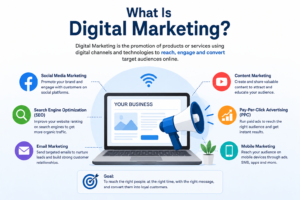
Digital marketing is the process of promoting products, services, or brands through internet-based channels. These channels include websites, search engines, social media platforms, email, mobile apps, online advertisements, and video-sharing platforms.
For example, a customer may search for a nearby restaurant on Google, discover a clothing brand through an Instagram reel, or receive a discount offer through email. Each of these interactions is part of digital marketing.
The main purpose is not simply to attract attention. A successful strategy should guide the customer toward a meaningful action, such as:
- Visiting a website
- Calling a business
- Sending a message
- Booking an appointment
- Subscribing to an email list
- Purchasing a product
- Returning for another order
Why Is Digital Marketing Important?
Customers now have access to more choices than ever before. Before buying a product or booking a service, many people compare prices, read reviews, visit websites, and check social media profiles. A business with a weak online presence may lose customers even if it offers an excellent product.
Digital marketing helps businesses compete by making them easier to discover and trust.
Key Benefits of Digital Marketing
Targeted reach: Businesses can communicate with people based on their interests, location, needs, and online behavior.
Measurable performance: Website traffic, clicks, inquiries, sales, and advertising costs can be tracked.
Flexible budgets: Small businesses can begin with a limited budget and increase spending after identifying effective campaigns.
Improved customer communication: Businesses can answer questions, send updates, and provide support through multiple online channels.
Long-term visibility: Helpful website content and search engine optimization can continue attracting potential customers after publication.
Personalized experiences: Businesses can show relevant products, offers, or messages based on a customer’s interests and actions.
How Does Digital Marketing Work?
Digital marketing works by connecting the right message with the right audience at the right stage of the customer journey.
A customer usually moves through four stages:
1. Awareness
The customer discovers your brand for the first time. This may happen through a Google search, social media post, video, or online advertisement.
2. Consideration
The customer visits your website, reads reviews, compares prices, checks your services, or follows your social media account.
3. Conversion
The customer takes action by placing an order, submitting a form, calling your business, or booking an appointment.
4. Retention
The business encourages the customer to return through useful emails, loyalty offers, excellent support, and relevant follow-ups.
A strong digital marketing strategy does not focus only on immediate sales. It builds trust at every stage.
10 Essential Digital Marketing Strategies
1. Search Engine Optimization
Search engine optimization, commonly called SEO, is the process of improving a website so that it can appear more prominently in search engine results.
For example, a carpet cleaning company may want to appear when someone searches for “carpet cleaning near me.” An online clothing store may want to rank for searches related to its products.
SEO includes several areas:
On-Page SEO
On-page SEO focuses on the content and structure of individual webpages. Important elements include:
- Page titles
- Headings
- Helpful written content
- Image alt text
- Internal links
- Meta descriptions
- Clear URLs
Google advises website owners to use words that people search for in important locations such as the page title, main heading, alt text, and link text.
Technical SEO
Technical SEO helps search engines crawl and understand a website. It includes:
- Mobile responsiveness
- Website speed
- Secure browsing
- Sitemap submission
- Indexing checks
- Fixing broken links
- Clear website structure
Google recommends making websites secure, fast, accessible, and functional across devices.
Off-Page SEO
Off-page SEO includes activities outside your website that improve trust and authority. Relevant backlinks, brand mentions, business listings, and positive reviews can support visibility.
SEO usually requires patience, but it can create valuable long-term traffic.
2. Content Marketing
Content marketing is the process of creating useful information that answers customer questions and supports business goals.
Examples include:
- Blog articles
- Service pages
- Product guides
- Case studies
- Tutorials
- Videos
- Infographics
- Checklists
- Frequently asked questions
Imagine that you sell skincare products. Instead of publishing only promotional posts, you could write helpful articles about product ingredients, skincare routines, and common customer concerns.
Useful content helps potential customers understand their options. It can also improve search visibility when it provides original value.
Google’s guidance emphasizes creating content for people rather than producing repetitive pages only to gain search traffic.
3. Social Media Marketing
Social media marketing helps businesses build awareness, communicate with customers, and promote products or services.
Common content formats include:
- Images
- Reels
- Short videos
- Stories
- Polls
- Carousels
- Customer testimonials
- Behind-the-scenes posts
- Product demonstrations
The right platform depends on your audience and business type. A fashion brand may focus on visual content, while a business-to-business company may benefit from professional educational posts and case studies.
A balanced content plan should include educational, engaging, trust-building, and promotional content. Publishing only sales posts can make an account feel repetitive.
4. Pay-Per-Click Advertising
Pay-per-click advertising, also known as PPC, allows businesses to pay for online visibility. Depending on the campaign, businesses may pay for clicks, views, leads, or other actions.
Search advertisements can appear when users actively search for a product or service. Social media advertisements can introduce a product to a carefully selected audience.
Paid advertising can produce results faster than many organic methods, but it requires proper planning. A successful campaign needs:
- A clear objective
- A defined target audience
- Strong visuals
- Persuasive copy
- A useful landing page
- Accurate conversion tracking
- Regular optimization
Advertising should not be judged only by clicks. The most important question is whether the campaign generates profitable leads or sales.
5. Email Marketing
Email marketing allows businesses to communicate directly with subscribers and customers. It is useful for building relationships, sharing updates, and encouraging repeat purchases.
Examples of email campaigns include:
- Welcome emails
- Product launch announcements
- Educational newsletters
- Discount offers
- Appointment reminders
- Abandoned-cart reminders
- Customer feedback requests
- Re-engagement campaigns
The best emails are relevant and helpful. Sending too many messages or using misleading subject lines can damage trust.
Businesses should focus on permission-based email lists instead of purchasing random contact lists.
6. Local Digital Marketing
Local digital marketing helps businesses attract customers within a specific city or service area.
It is especially important for:
- Clinics
- Restaurants
- Plumbers
- Electricians
- Salons
- Cleaning companies
- Repair businesses
- Real estate agents
- Home-service providers
A local strategy may include:
- An optimized Google Business Profile
- Accurate contact details
- Customer reviews
- Local service pages
- City-based keywords
- Location-specific FAQs
- Mobile-friendly call buttons
- Clear operating hours
For example, a clinic in Lahore may create a dedicated service page that explains its treatment options, address, appointment process, and frequently asked questions.
Local marketing works best when customers can quickly find the information they need
7. Video Marketing
Video marketing can make complex information easier to understand. It also helps businesses show products, services, and customer experiences in a more engaging format.
Useful video ideas include:
- Product demonstrations
- Tutorials
- Before-and-after examples
- Customer testimonials
- Business introductions
- Frequently asked questions
- Behind-the-scenes clips
- Short educational tips
A restaurant could show how a signature dish is prepared. A software company could publish a short screen recording explaining an important feature. A clothing store could create videos showing different styling options.
Videos should focus on clear communication rather than unnecessary effects.
8. Influencer and Affiliate Marketing
Influencer marketing involves working with content creators who can introduce a brand to their audience. Affiliate marketing allows people to promote products and earn commission when their referrals lead to a sale.
These methods can be effective when the partnership feels natural and relevant.
Before choosing a creator, businesses should review:
- Audience relevance
- Engagement quality
- Content style
- Brand alignment
- Previous collaborations
- Audience trust
- Expected results
A smaller creator with a highly relevant audience may generate better results than a larger creator with unrelated followers.
9. Conversion Rate Optimization
Conversion rate optimization, commonly called CRO, focuses on increasing the percentage of visitors who complete a desired action.
Imagine that 1,000 people visit your website and 20 people make a purchase. Your conversion rate is 2%. If improvements help 40 people purchase, the rate increases to 4% without requiring additional traffic.
CRO improvements may include:
- A clearer headline
- Faster website loading
- Better product images
- Shorter forms
- Visible contact buttons
- Customer reviews
- Simple checkout steps
- Clear pricing
- Strong calls to action
- Mobile-friendly design
A/B testing can compare two versions of a page or advertisement to determine which one performs better.
10. Marketing Analytics and Reporting
Digital marketing decisions should be supported by data.
Important metrics include:
| Metric | Meaning |
| Website Traffic | Number of visitors reaching your website |
| Reach | Number of unique people who see your content |
| Impressions | Total number of times your content appears |
| Click-Through Rate | Percentage of people who click after seeing a link or advertisement |
| Cost Per Click | Average advertising cost for each click |
| Cost Per Lead | Average amount spent to generate one inquiry |
| Conversion Rate | Percentage of visitors who complete a desired action |
| Customer Acquisition Cost | Average cost of gaining a paying customer |
| Return on Ad Spend | Revenue generated compared with advertising spend |
| Repeat Purchase Rate | Percentage of customers who buy again |
Analytics help businesses identify what is working and what needs improvement. Metrics should always be connected to business goals.
Organic Marketing vs Paid Marketing
Both organic and paid marketing have value. The strongest strategy often combines them.
| Organic Marketing | Paid Marketing |
| Builds visibility gradually | Can generate faster exposure |
| Includes SEO, blogs, and unpaid social media content | Includes search ads and social media ads |
| Requires consistent effort | Requires an advertising budget |
| Can provide long-term traffic | Often slows down when spending stops |
| Helps build authority and trust | Helps test offers and reach targeted audiences |
A new business may use paid advertisements to attract initial visitors while building organic visibility through content and SEO.
Common Digital Marketing Mistakes
Many businesses spend time and money online without a clear plan. Avoid these common mistakes:
Focusing Only on Followers
A large follower count does not always result in sales. Engagement quality, inquiries, conversions, and customer retention matter more.
Ignoring Mobile Users
Many customers visit websites on smartphones. A confusing mobile layout can reduce inquiries and sales.
Using the Same Strategy on Every Platform
Each platform has a different audience and purpose. Content should be adapted rather than copied without changes.
Running Ads Without Tracking
Without conversion tracking, it is difficult to determine which campaigns generate real business results.
Publishing Thin Content
Short, repetitive, or generic webpages may not answer customer questions properly. Useful content should provide clear and original value.
Neglecting Existing Customers
Repeat customers can be highly valuable. Follow-up emails, reliable service, and loyalty offers can support long-term growth.
Expecting Immediate SEO Results
SEO takes time. Businesses should focus on consistent improvement rather than expecting instant rankings.
How to Create a Digital Marketing Plan
A practical plan does not need to be complicated.
Step 1: Define Your Goal
Choose one primary goal, such as increasing online sales, generating leads, or attracting local customers.
Step 2: Understand Your Audience
Identify your customer’s needs, location, budget, concerns, and preferred online platforms.
Step 3: Create a Strong Offer
Explain why customers should choose your business. Highlight benefits such as free delivery, quick support, customization, transparent pricing, or a free consultation.
Step 4: Select the Right Channels
Choose channels based on customer behavior. A local service provider may focus on search visibility and calls, while an ecommerce store may prioritize product pages, social media content, and retargeting.
Step 5: Publish Helpful Content
Answer real customer questions through articles, videos, service pages, product guides, and FAQs.
Step 6: Track Results
Measure leads, purchases, costs, traffic sources, and conversion rates.
Step 7: Improve Continuously
Test headlines, visuals, website sections, offers, and advertisements. Keep what works and improve what does not.
The Future of Digital Marketing
Digital marketing is becoming more personalized, data-driven, and focused on customer experience. Artificial intelligence can help businesses organize research, analyze data, generate ideas, and improve workflow efficiency.
However, AI does not replace a strong marketing strategy. Businesses still need original insights, accurate information, human review, and genuine customer understanding.
Google’s current guidance for appearing in AI-powered search features remains connected to foundational SEO practices: websites should meet technical requirements, follow search policies, and publish helpful, reliable, people-first content.
Businesses that combine useful content, strong branding, customer trust, and consistent improvement are more likely to build long-term online visibility.
Frequently Asked Questions About Digital Marketing
What is digital marketing in simple words?
Digital marketing means promoting a product, service, or business through online channels such as websites, search engines, social media, email, videos, and digital advertisements.
Which type of digital marketing is best for beginners?
Social media marketing, content writing, SEO basics, and email marketing are good starting points. Beginners should understand customer needs and marketing fundamentals before moving into advanced advertising.
Is digital marketing suitable for small businesses?
Yes. Small businesses can use local SEO, social media, helpful content, messaging apps, and carefully planned advertisements to reach potential customers without needing a large initial budget.
How long does SEO take to work?
SEO is a long-term strategy. The time required depends on competition, website quality, content depth, technical health, and authority. Some improvements may appear earlier, while competitive keywords often require sustained effort.
What is the difference between SEO and PPC?
SEO focuses on improving organic search visibility over time. PPC uses paid advertisements to gain visibility more quickly. Both can work together as part of a complete digital marketing strategy.
How much should a business spend on digital marketing?
There is no single budget that works for every business. The right amount depends on the industry, audience, location, average profit per customer, and business goals. Start with a controlled budget, track results, and scale carefully.
Does every business need a website?
A website is highly valuable because it gives a business control over its content, branding, and customer journey. Social media profiles are useful, but a professional website can improve trust and support search visibility.
What skills are required for digital marketing?
Important skills include content writing, communication, customer research, SEO, social media management, advertising, analytics, email marketing, design basics, and conversion optimization.
Can digital marketing increase sales?
Yes, but results depend on the quality of the product, customer demand, pricing, offer, website experience, follow-up process, and marketing execution. Marketing works best when the complete customer experience is strong.
Conclusion
Globalize DigiHub is more than posting on social media or running advertisements. It is a complete system for attracting potential customers, building trust, generating leads, increasing sales, and encouraging repeat business.
A strong strategy combines search engine optimization, useful content, social media, paid advertising, email campaigns, local visibility, video marketing, conversion optimization, and performance tracking.
Businesses should begin with a clear goal and a deep understanding of their audience. They should then choose the right channels, publish helpful content, measure results, and improve their approach consistently.